Article · March 2026
Feeling right is not the same as being right. By Edouard Gruwez.
Confidence is often treated as a signal of competence and accuracy. In meetings, discussions and decision-making processes, the most confident voice is often the most influential.
Intuitively, this makes sense. Confidence feels like clarity. It feels like control. It feels like truth. But is that so?
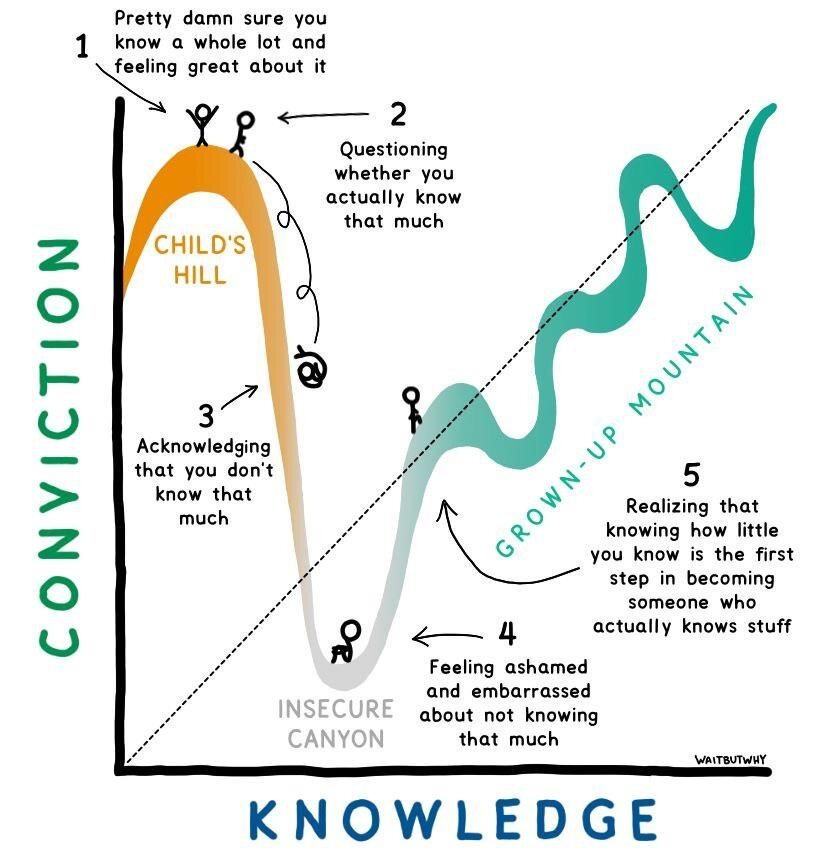
Research shows that confidence and accuracy are only weakly related — and often negatively related. This is known as the Confidence–Accuracy Paradox. The objective is not to sound right. It is to be right more often. To bridge the gap between feeling right and being right, we must:
Miscalibrated confidence is one of the most common, and most underestimated, risks in decision-making. The problem is not confidence itself, but how well it reflects reality. Overconfidence leads to poor decisions: risks are underestimated, timelines misjudged, alternative viewpoints ignored — and strong, confident opinions dominate the discussion and silence more nuanced perspectives. Underconfidence is equally damaging: inaction, missed opportunities, "paralysis by analysis". People hesitate to speak up, valuable insights remain unshared, decisions are delayed or avoided.
Understand what confidence really signals. Confidence is not a measure of correctness. It is a measure of how coherent a story feels. When an idea is presented with expressive and cognitive coherence, it feels right — but that feeling is driven by cognitive ease, not by the quality of the underlying reasoning. Next time an idea feels "obviously" right, ask yourself: does the evidence convince me, or just the fluency of the story?
Identify situations where confidence becomes unreliable. Confidence is particularly misleading:
In these situations confidence and accuracy are negatively correlated: the more confident someone is about an idea, the more likely that idea is wrong. And counterintuitively, group discussions — if not properly orchestrated — can amplify the effect: anchoring, the bandwagon effect, group polarisation and the HiPPO effect (the Highest Paid Person's Opinion) drift the shared conviction further from what is accurate.
Be aware of how the environment reinforces certainty. Easy access to information creates the illusion that we understand more than we do — the Google effect. The ability to access an answer is confused with the ability to understand it. Meanwhile social networks, LLMs and search engines work as echo chambers, and complex topics are reduced to headline-level summaries. The result is a paradox: more information than ever, growing confidence — and dropping understanding. Slow down, question your understanding, look for conflicting information.
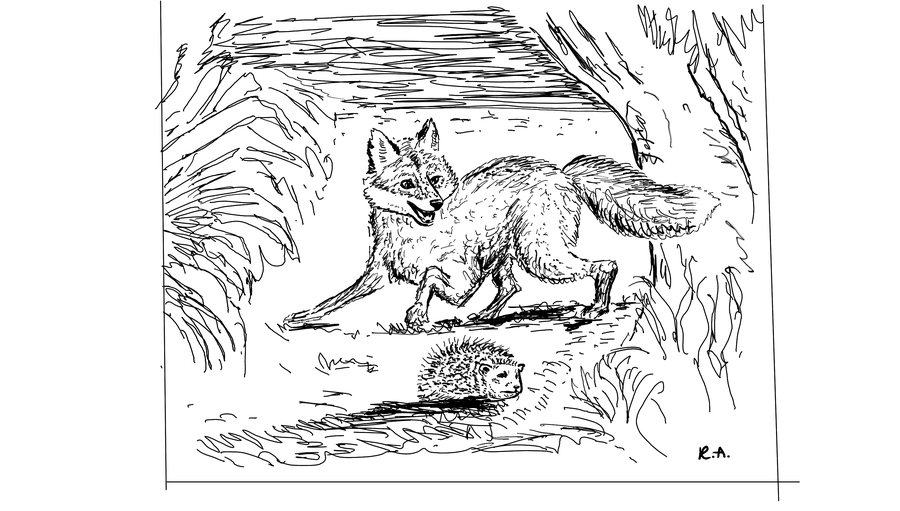
Distinguish between hedgehogs and foxes. The metaphor comes from the Greek poet Archilochus: "The fox knows many things, but the hedgehog knows one big thing." Hedgehogs rely on one dominant idea. They simplify reality into clear, black-and-white explanations — easy to follow, and the single truth makes them very confident. Foxes pursue many ideas and consider multiple options. They accept complexity, uncertainty and nuance. Their thinking is less simple, but more flexible and more robust.
Recognise the limits of one-sided thinking. Research by Philip Tetlock shows that experts who apply one overarching theory tend to be more confident — but considerably less accurate in their predictions. Most decisions involve multiple variables, conflicting signals and uncertainty; reducing that complexity too early leads to oversimplification, and ultimately to poorer decisions.
Think like a fox. Act like a hedgehog. Improving accuracy means questioning your own knowledge and biases, considering multiple hypotheses, actively looking for disconfirming evidence, exploring scenarios, and thinking in probabilities. A fox-like mindset does not mean being indecisive — it means being thorough before being decisive. But once the decision is made, the mindset must change: be clear, be consistent, commit. The effectiveness lies in the sequence.
Structure team decisions. When managed well, diverse perspectives improve accuracy — the wisdom of the crowd. Without structure, the opposite happens: the madness of the herd. A simple remedy is to separate individual and group thinking, in the sequence Kahneman proposes: estimate → talk → estimate. First, individuals write down their estimate anonymously and independently. Then discuss the assumptions and the logic — making sure everyone participates, especially the silent experts. Then estimate again, anonymously. Use the median rather than the average, so outliers weigh less.
Use data and algorithms for recurring decisions. Human judgment is inconsistent — influenced by context, mood and bias. For recurring decisions, algorithms often outperform intuition, produce results faster, and reduce conflict: by shifting the debate from outcome to parameters, you depersonalise it. This does not mean replacing judgement — it means supporting it.
Facilitate strategic decisions. When stakes, uncertainty and complexity are high, never rely on a purely organic, intuitive process. Define the problem and the solution space precisely. Assess data quality: how reliable is our information, what is missing, what assumptions fill the gaps? Audit intuition and bias. Bring in outside views. And never base the decision on one view of the future — use different scenarios, each with its own probability, including the actions of other stakeholders such as regulators and competitors.
Without structure, you may sound right. With structure, you are more likely to be right.
Our strongest convictions are often our biggest blind spots. In a complex, uncertain world, feeling certain is rarely a sign of being right; it is merely a sign that you have stopped thinking. That insight matters even more in an era where information is instant and sounding certain is seen as a quality.
Do you have the courage to be a fox in a world of hedgehogs? Do you have the discipline to trust your structure more than your gut? The goal is not to eliminate confidence — it's to earn it.